Eazy Drop
March 2022 – May 2022
Overview
For my second mechanical design class, the focus shifted away from building hardware and more toward understanding customer requirements and designing around real human needs. Our "customer" was a woman at a nearby elderly home who was kind enough to work with our class. She was blind and struggling with two main issues: keeping track of which pills she had taken, and administering her eye drops. My group was assigned to help with the eye-drop problem.
During our interview with her, we learned a lot about what she was going through. Her hands were shaky, the bottles were tiny and hard to grip, the seals were difficult to break, the bottles were stiff to squeeze, and she often missed her eyes entirely. If she dropped a bottle, she couldn't find it without assistance. Hearing all of this made us want to design something that would actually help her — and not just check boxes for a class project.
After a lot of discussion, we identified the major needs:
• A larger, easy-to-grip body that she could hold comfortably
• A handle so she wouldn't drop it
• Built-in leverage to help her squeeze the bottle with minimal effort
• A way to guide the eye drops so they actually land in her eyes
• A way to open the device and insert different bottles without requiring strength or precision
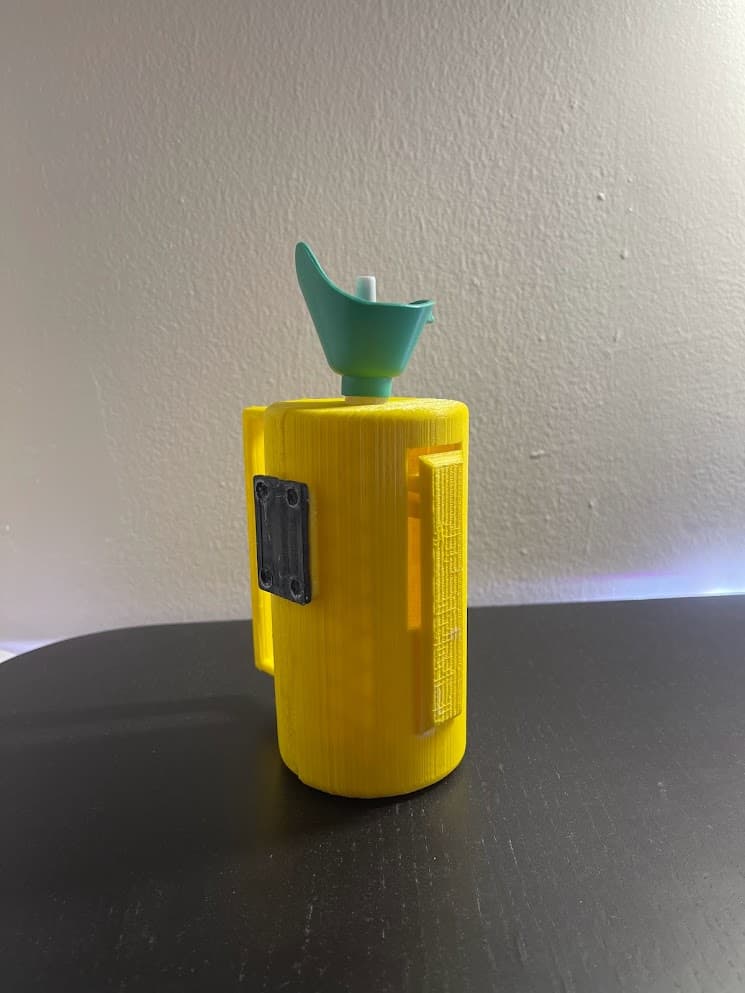
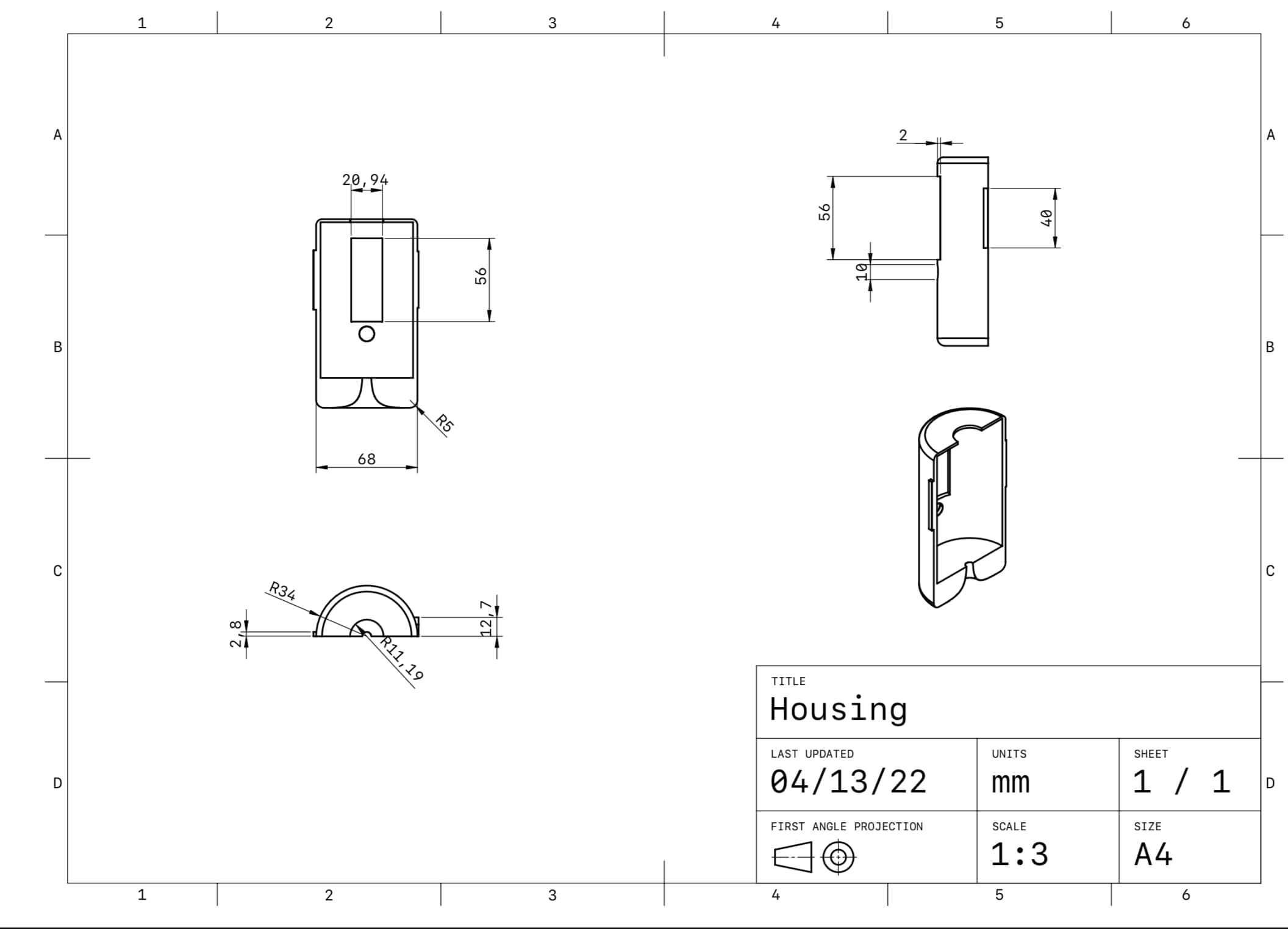
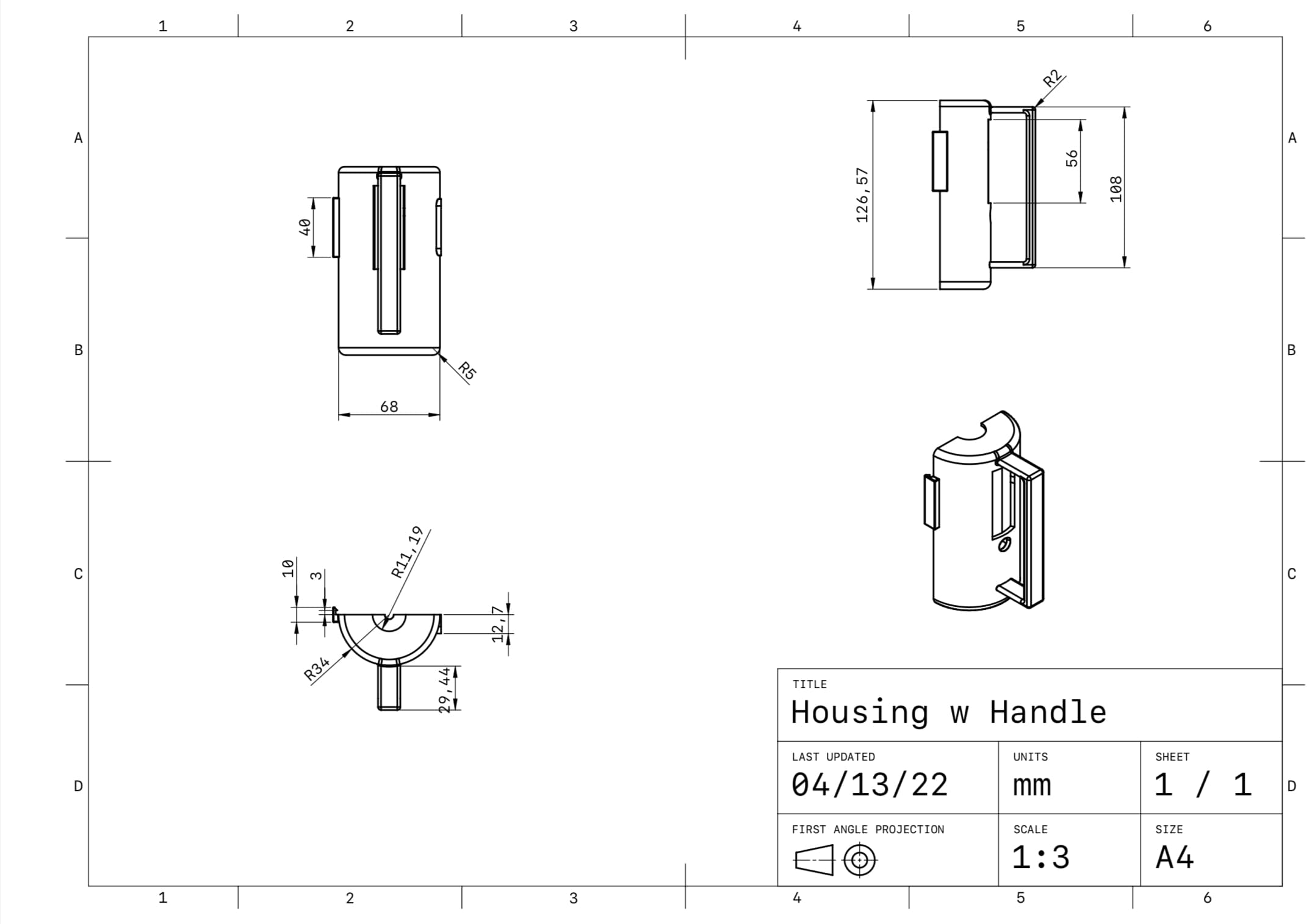
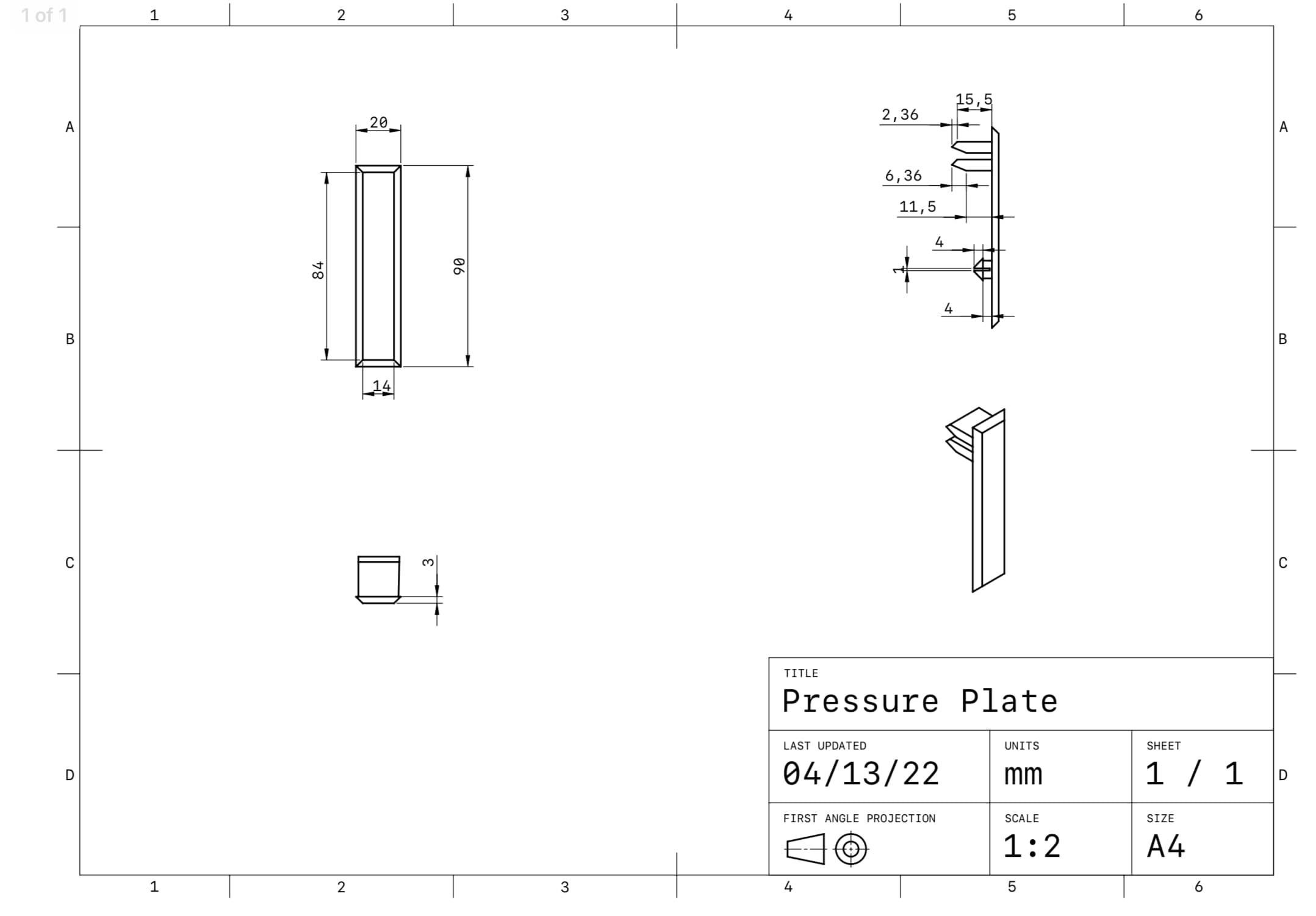
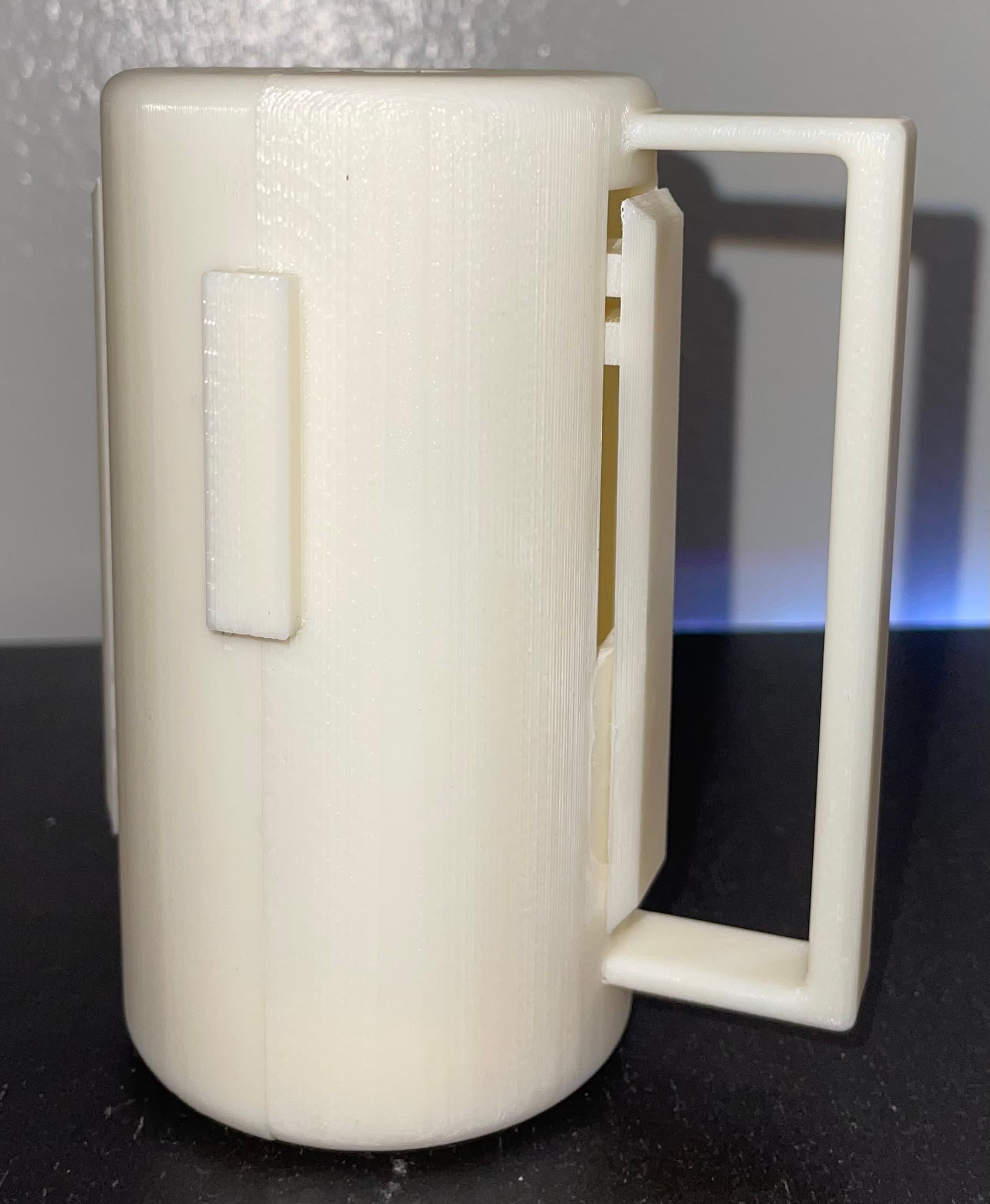
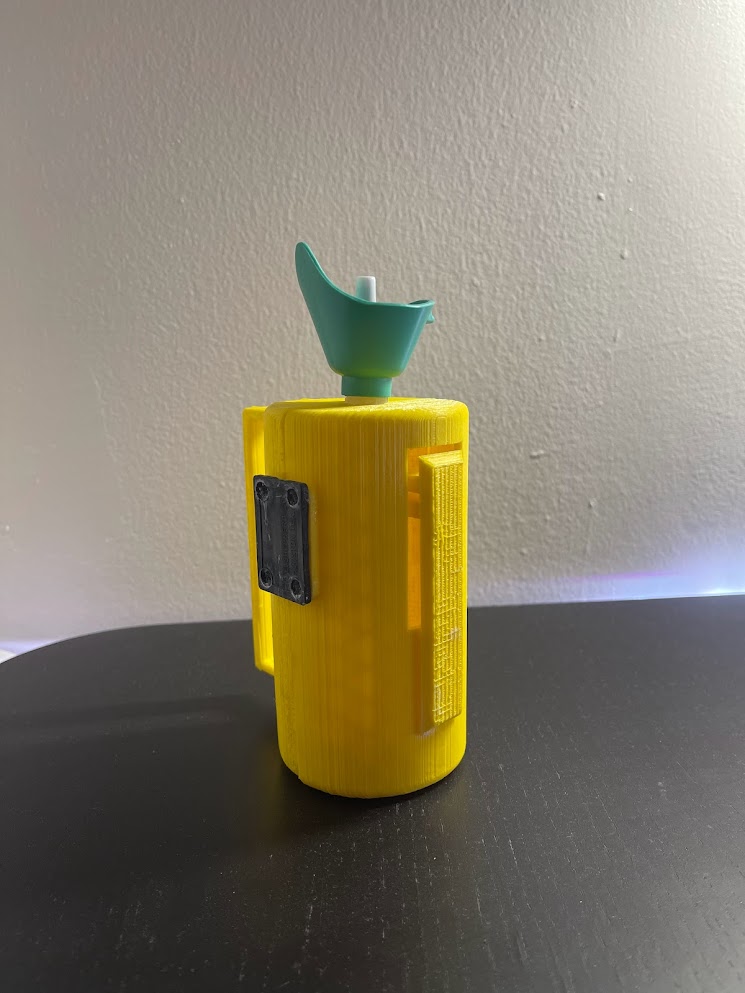
We eventually landed on a design: a cylindrical housing that opened on a hinge, with a mug-style handle for stability. On the sides, we added squeeze tabs with small fins to intentionally reduce the contact area on the eye-drop bottle. Since pressure equals force divided by area, decreasing the contact area meant she could generate much more pressure with the same amount of force — making it dramatically easier for her to squeeze the bottle.
For aiming the eye drops, we realized we didn't need some complex engineered solution. We found a soft rubber eye-piece already designed for guiding eye drops and decided to integrate it into the final design.
I modeled everything in Shapr3D, found a low-cost plastic hinge on McMaster-Carr, and sent the design to the 3D-printing lab. The first prototype had issues with the clasp, so we tweaked it and printed a second version. The print quality wasn't great — time was running out — but it worked well enough to test.
We brought the prototype to the elderly home and had our customer try it. She loved it, and seeing her excitement honestly made the whole project worth it. But there were still clear areas for improvement. She could squeeze the bottle much easier and the guiding piece helped her accuracy, but it took her slightly longer to administer the medication, the squeeze tabs made it too easy to dispense (causing excess drops), the clasp was still hard for her to open, and we didn't address the hardest part for her: breaking the seal on a new bottle.
With a few more design iterations, this could easily become a fully functional assistive device. If we had more time, I would have loved to refine the hinge and clasp, experiment with better materials, shrink the overall size, and design a built-in seal-breaker feature. Still, it was a meaningful project — both technically and personally — and it really showed how engineering can directly improve someone's quality of life.
Attachments
Technologies & Tools
Gallery