Green Propulsion Aircraft
January 2023 – May 2023
Overview
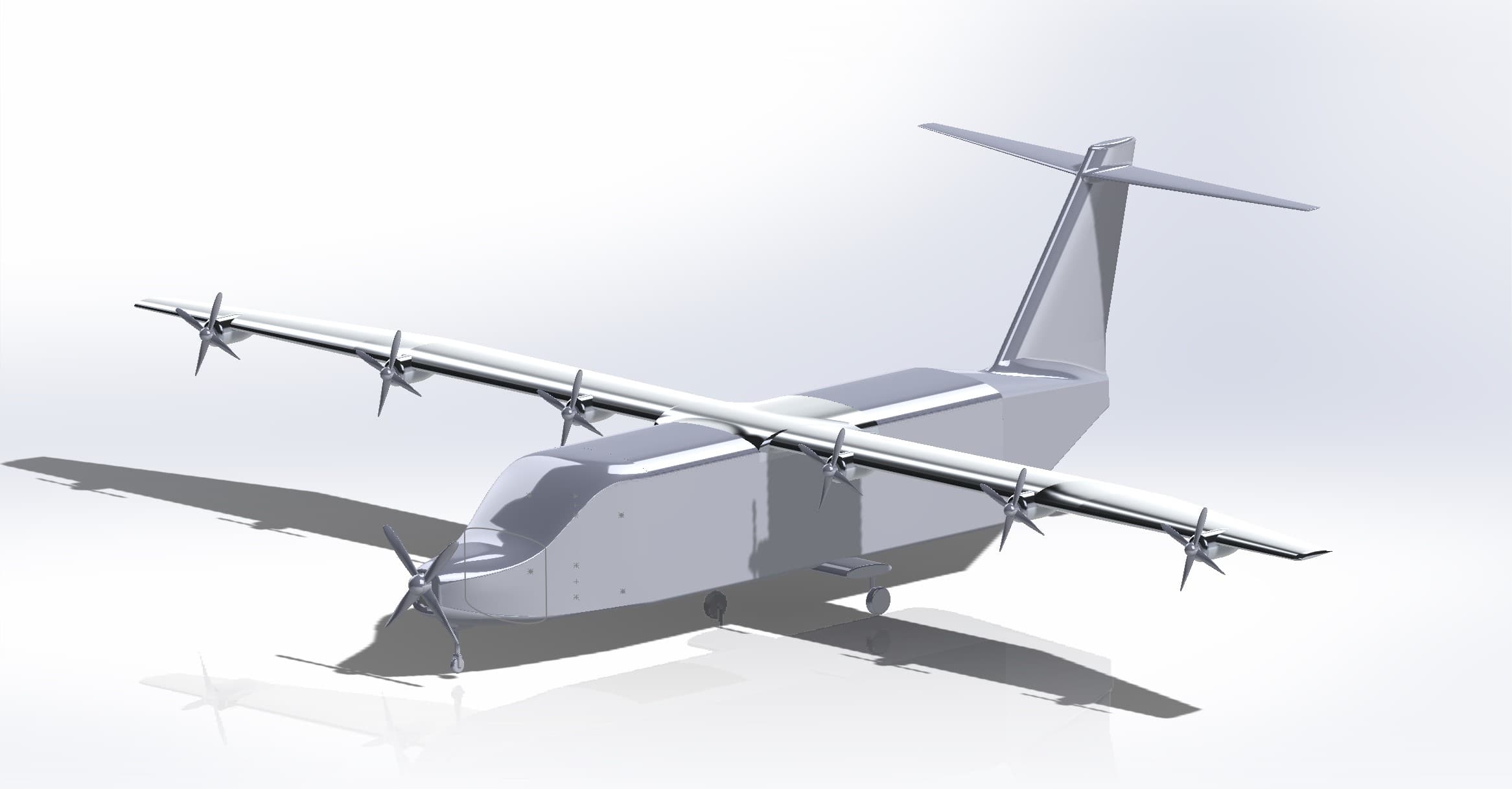
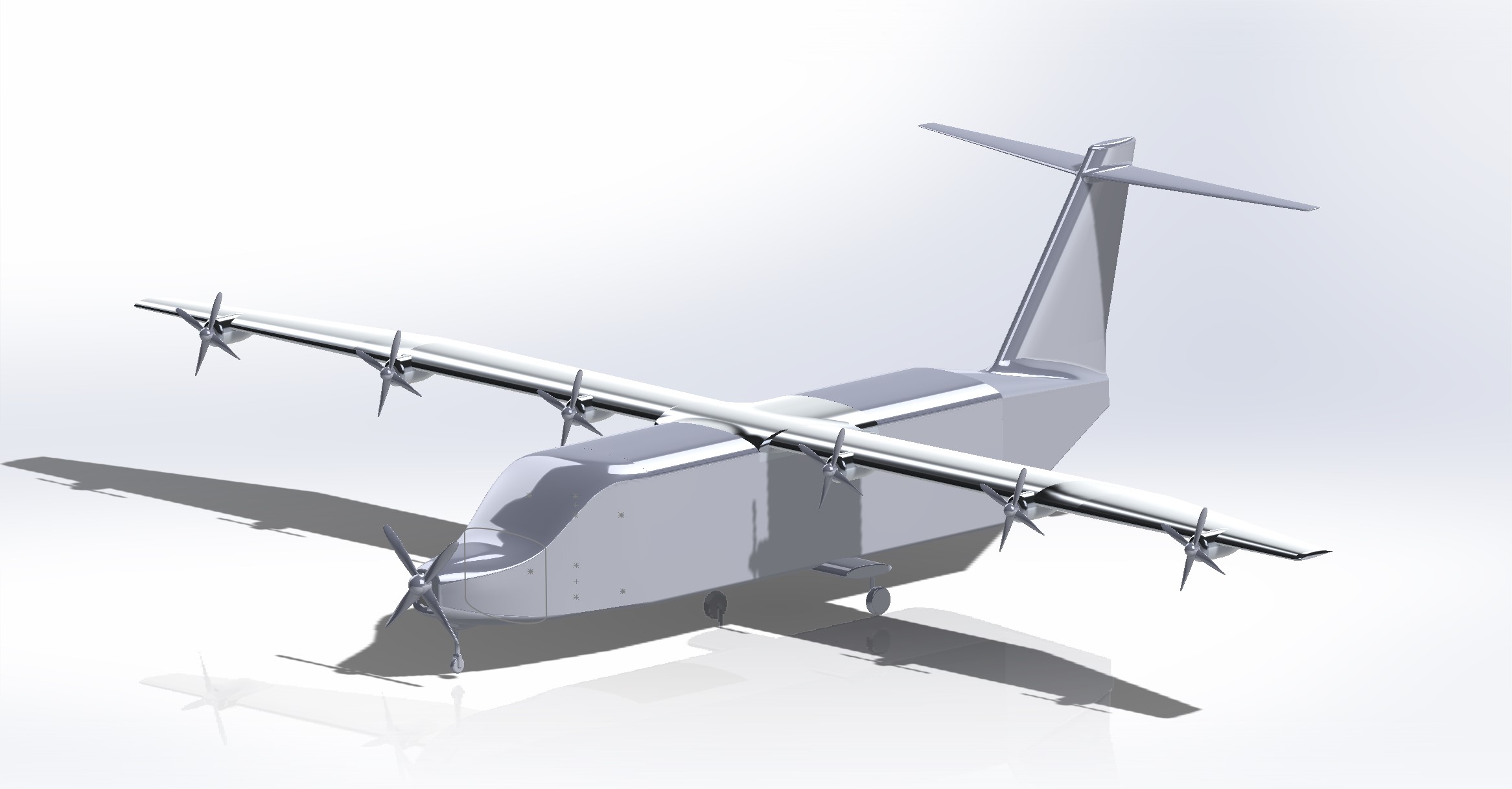
I’ve loved airplanes for as long as I can remember, so Aircraft Design I was easily my favorite class in college. The project that year came with an interesting challenge: instead of designing a traditional aircraft, we had to incorporate green propulsion technologies into a short-haul cargo plane similar in mission to the Cessna SkyCourier. Our job was to develop the aerodynamic profile and propulsion concept for a next-generation, environmentally conscious cargo aircraft.
We started by researching what “green propulsion” looked like for an aircraft of this size. Hydrogen had potential, but with the limited volume and mission constraints, batteries were the more realistic direction — despite their well-known downside: weight. Once we dug into the numbers, we realized a purely electric aircraft wasn’t feasible with current battery technology. However, turboprops are already very efficient during cruise, so a hybrid system quickly emerged as the best solution. Electric motors would handle takeoff, climb, descent, and taxi, while a turboprop would power the aircraft through cruise. This approach took advantage of both systems’ strengths and kept the design practical.
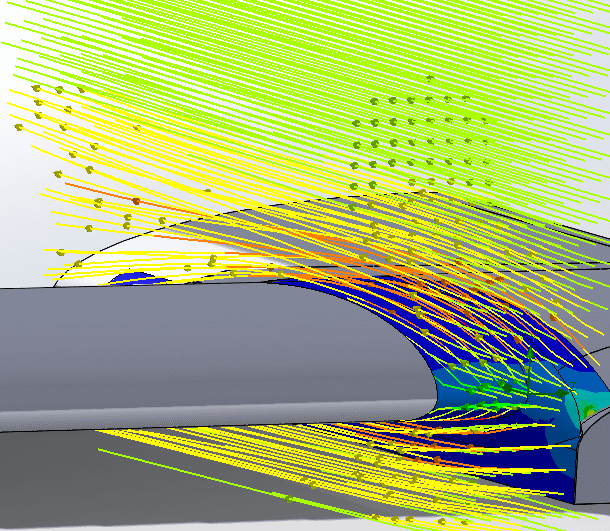
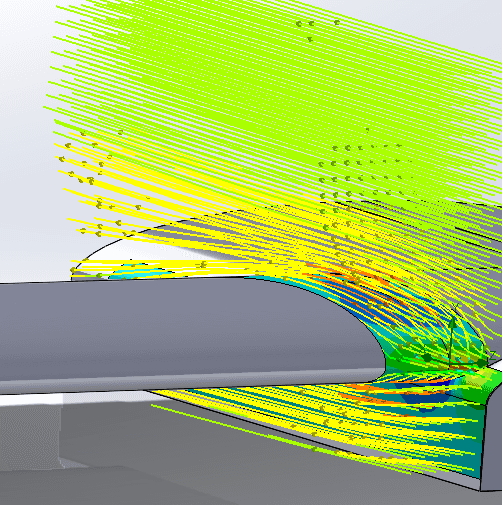
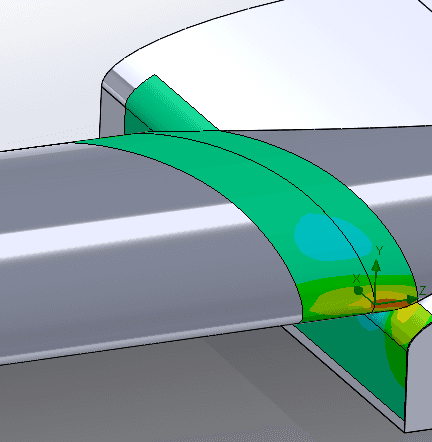
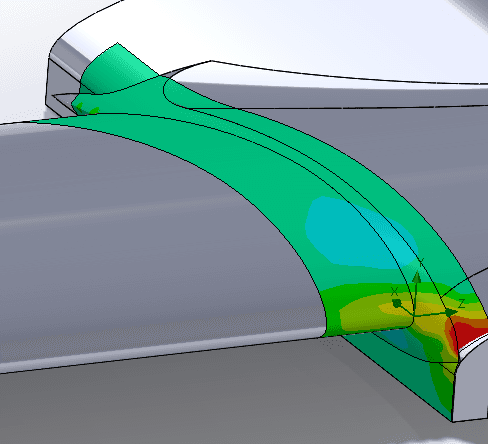
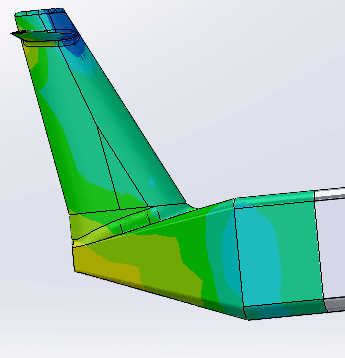
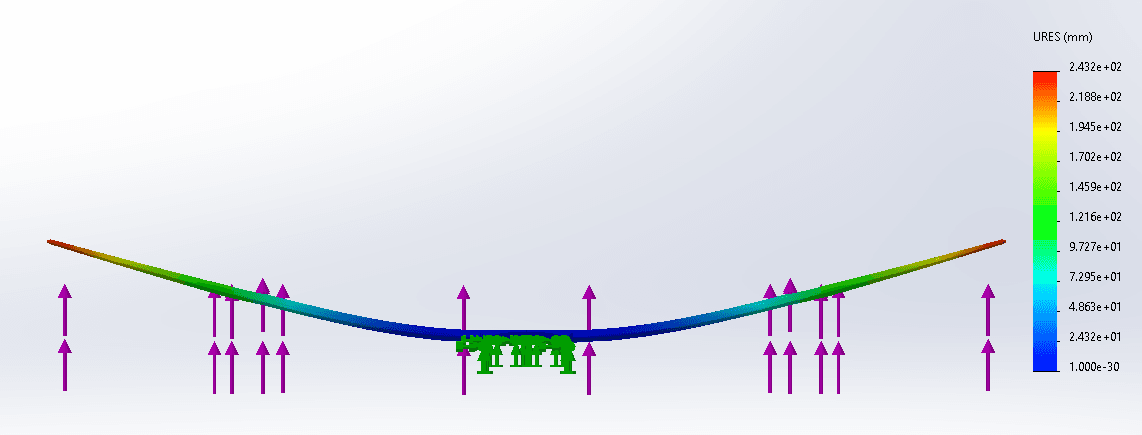
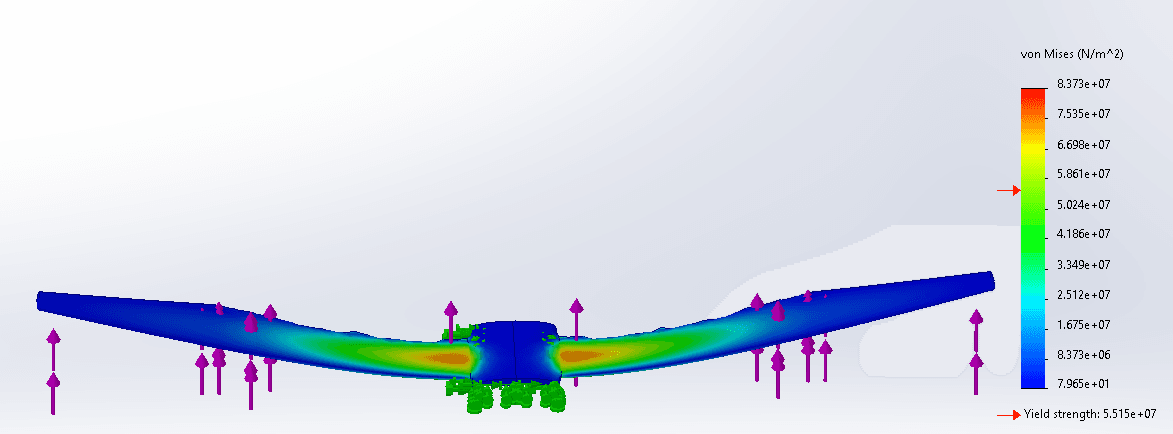
With the propulsion concept set, we moved into aerodynamic design. My teammates and I developed a workflow combining MATLAB, Python, and SolidWorks Flow Simulation. I wrote a Python script that worked alongside our MATLAB lift/drag analysis and our CFD studies, allowing us to iterate rapidly on wing geometries. After testing several airfoil combinations, we settled on a wing that transitioned from a NACA 4415 at the root to a NACA 2415 at the tip. This configuration produced a strong lift-to-drag ratio and delivered the aerodynamic efficiency we needed for the mission. To complement the aerodynamic work, we also performed finite element analysis using the SolidWorks FEA module to evaluate the structural stresses and deflections caused by our chosen wing profile, ensuring that the design was not only efficient but structurally sound.
For propulsion, we selected six small electric motors distributed evenly along the wing. These provided clean, efficient thrust during the low-speed phases of flight. For cruise, we chose a nose-mounted Pratt & Whitney PT6A-11AG turboprop, which checked all the boxes in terms of power, reliability, and efficiency. We also designed the battery system around modular packs placed low and forward in the fuselage so they could be swapped out quickly between flights — reducing downtime and eliminating the need for heavy charging infrastructure at small airports.
I also handled much of the fuselage and tail sizing, using classical sizing relationships to ensure stability and control across all phases of flight, including worst-case scenarios like motor failures. Once the full CAD model was built, we ran flow simulations and structural studies in SolidWorks to validate our geometry. We experimented with wing placement, wing-body fillets, and internal volume considerations until we reached a configuration that balanced aerodynamics and the hybrid propulsion layout.
Of course, no design project is without its flaws. One oversight we caught late was moving the outermost electric motors slightly inboard to reduce the need for wing struts. In reality, placing those motors at the wingtips would have helped counteract wingtip vortices and improved aerodynamic efficiency. Keeping the struts would have been the better choice. It didn’t compromise the concept, but it was a lesson in how small design decisions ripple through the aircraft’s performance.
Despite that, this project remains one of the most rewarding engineering experiences I’ve had. It tied together aerodynamics, propulsion, CAD, programming, simulation, and systems thinking into a single cohesive design effort. More importantly, it highlighted the constant trade-offs aircraft designers face — balancing energy density, efficiency, weight, geometry, and real-world constraints. The project paper and presentation are attached below.
Attachments
Technologies & Tools
Gallery