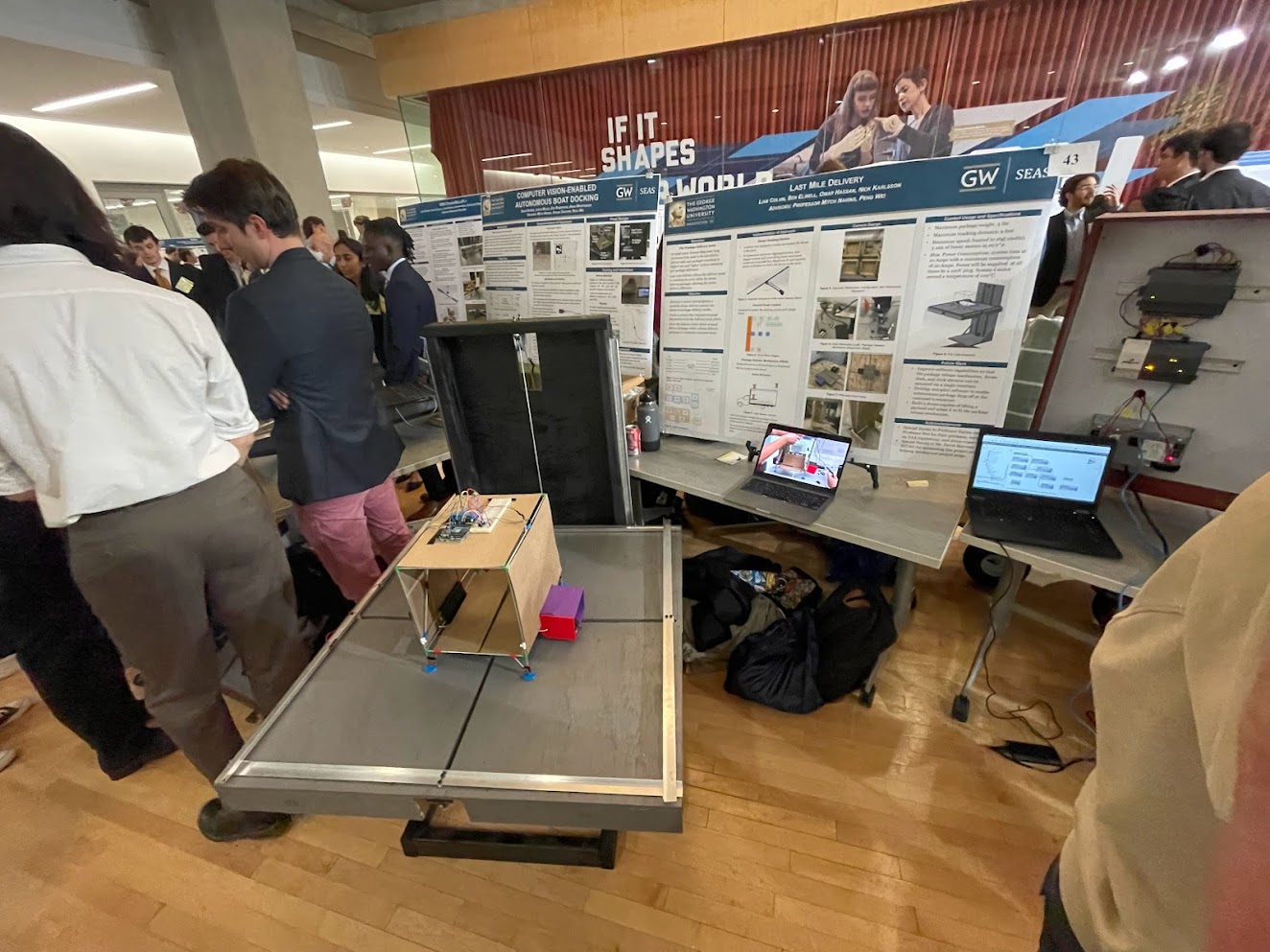
Last Mile Delivery
September 2022 – May 2023
Overview
Reaching my senior capstone was genuinely exciting — it was finally time to pull together everything I'd learned into one massive engineering project. Our customer was MITRE, and they wanted us to explore one of the most exciting innovations happening at the time: last-mile delivery systems. Because I had been working in the Intelligent Aerospace Systems Lab, and my professor already had an established relationship with MITRE, my group was assigned to this project, and I was asked to take on the role of project lead.
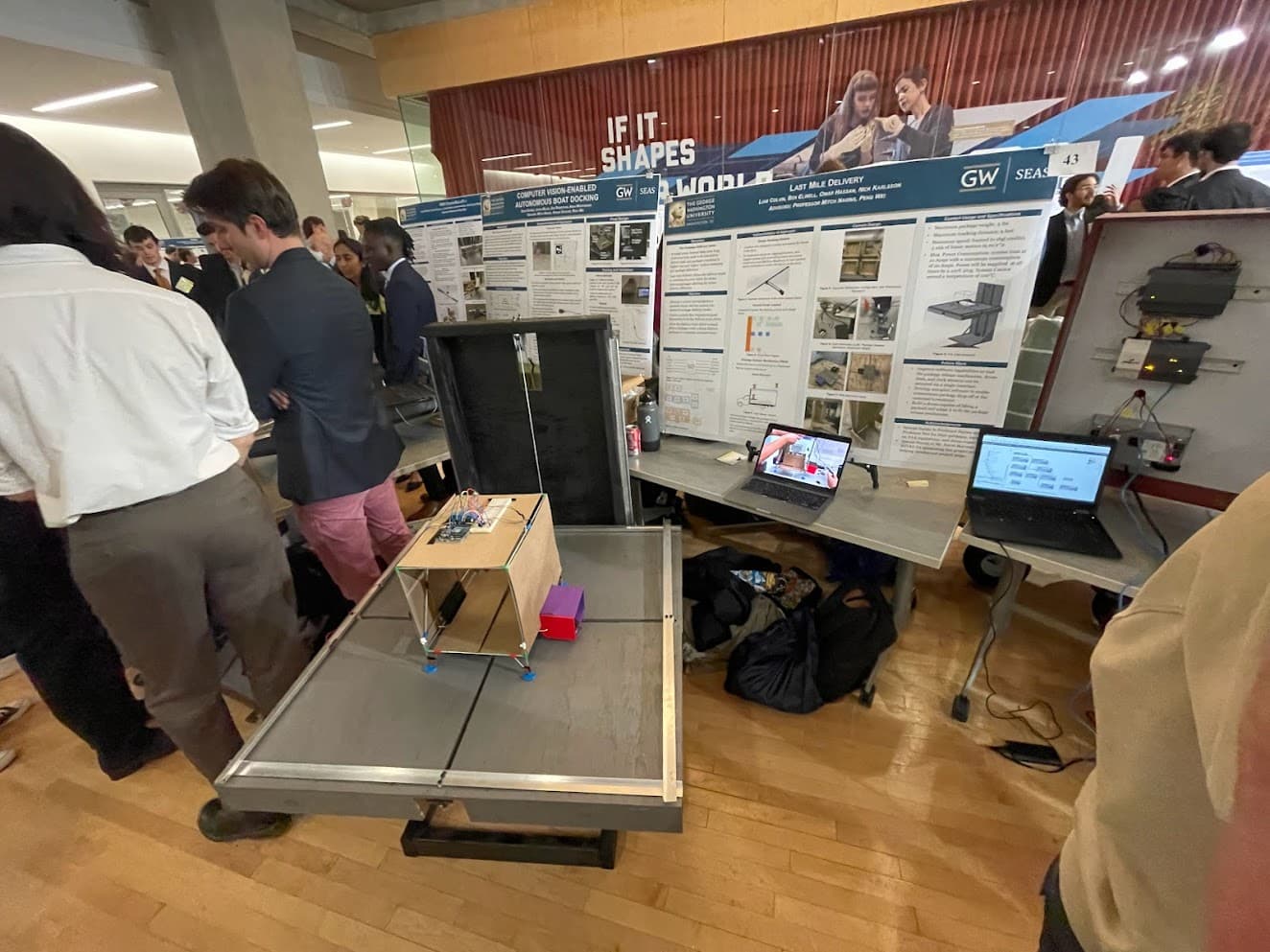
We met with MITRE and our faculty advisors to learn exactly what they needed. Their goal was to create a delivery system for rural areas where long driveways and spread-out properties make traditional delivery inefficient. The focus wasn't on designing the drone itself, but on the docking station and the delivery interface that would allow a drone to deploy from a truck, deliver a package, and return autonomously. That meant our design needed to secure the drone after landing, charge it automatically, and help the drone land consistently in the same spot every time.
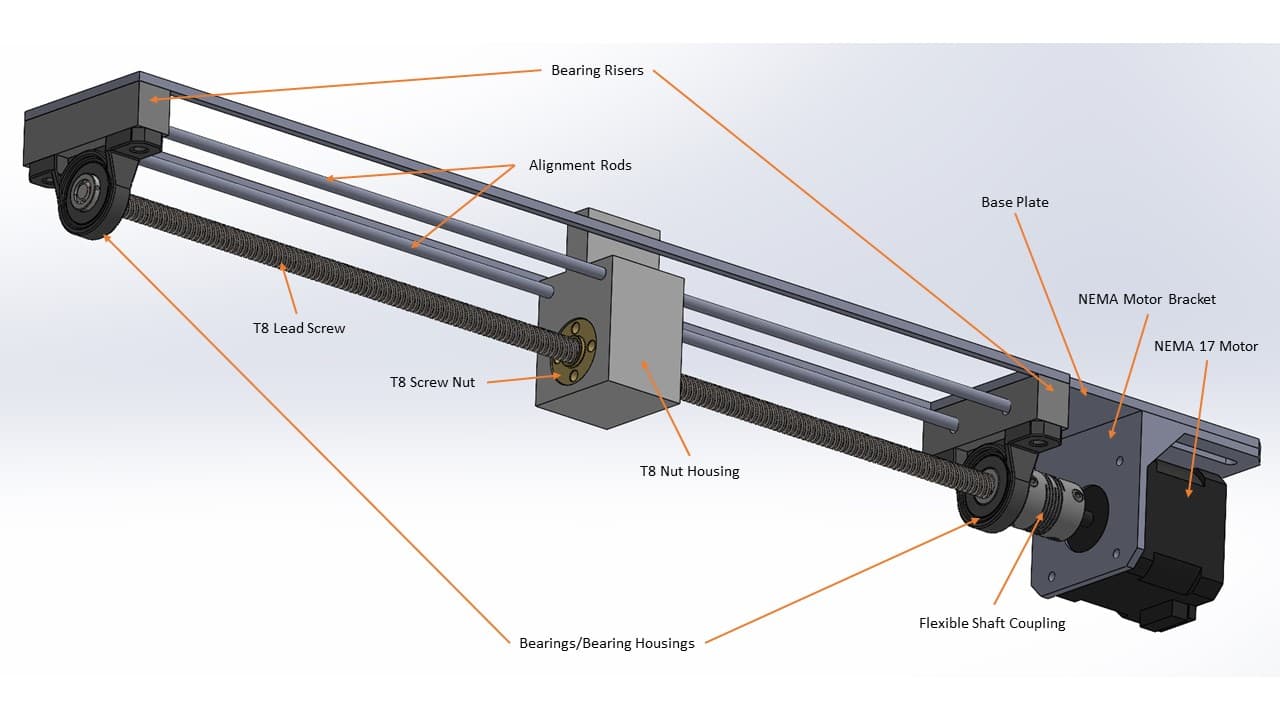
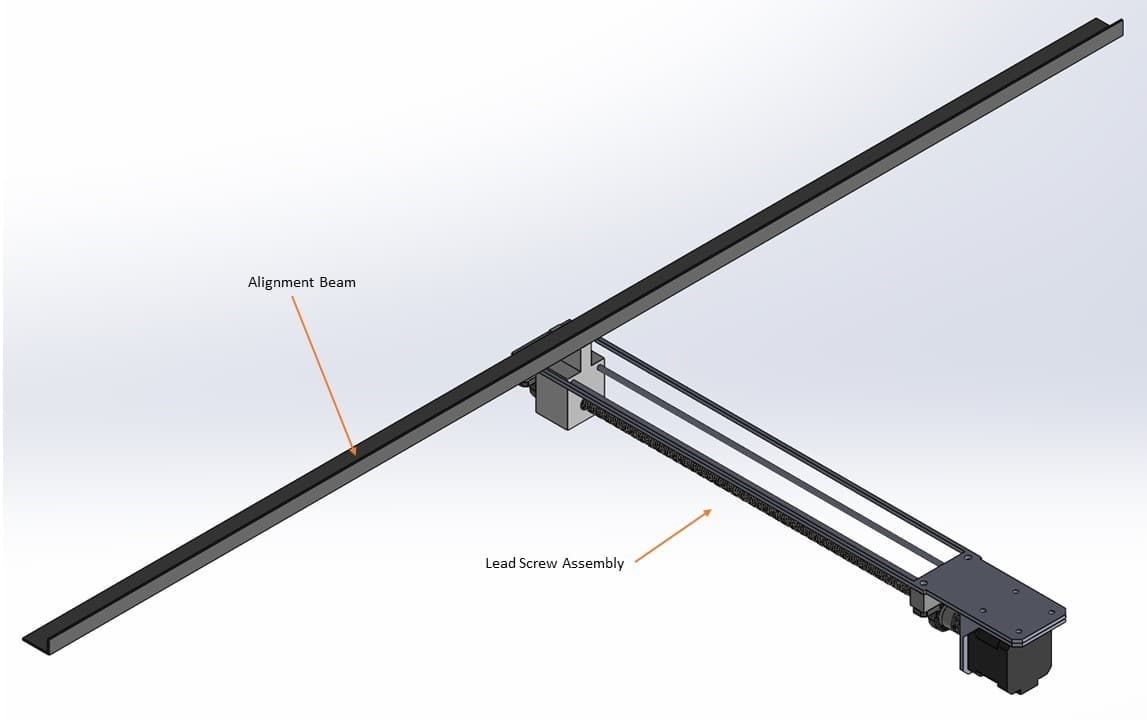
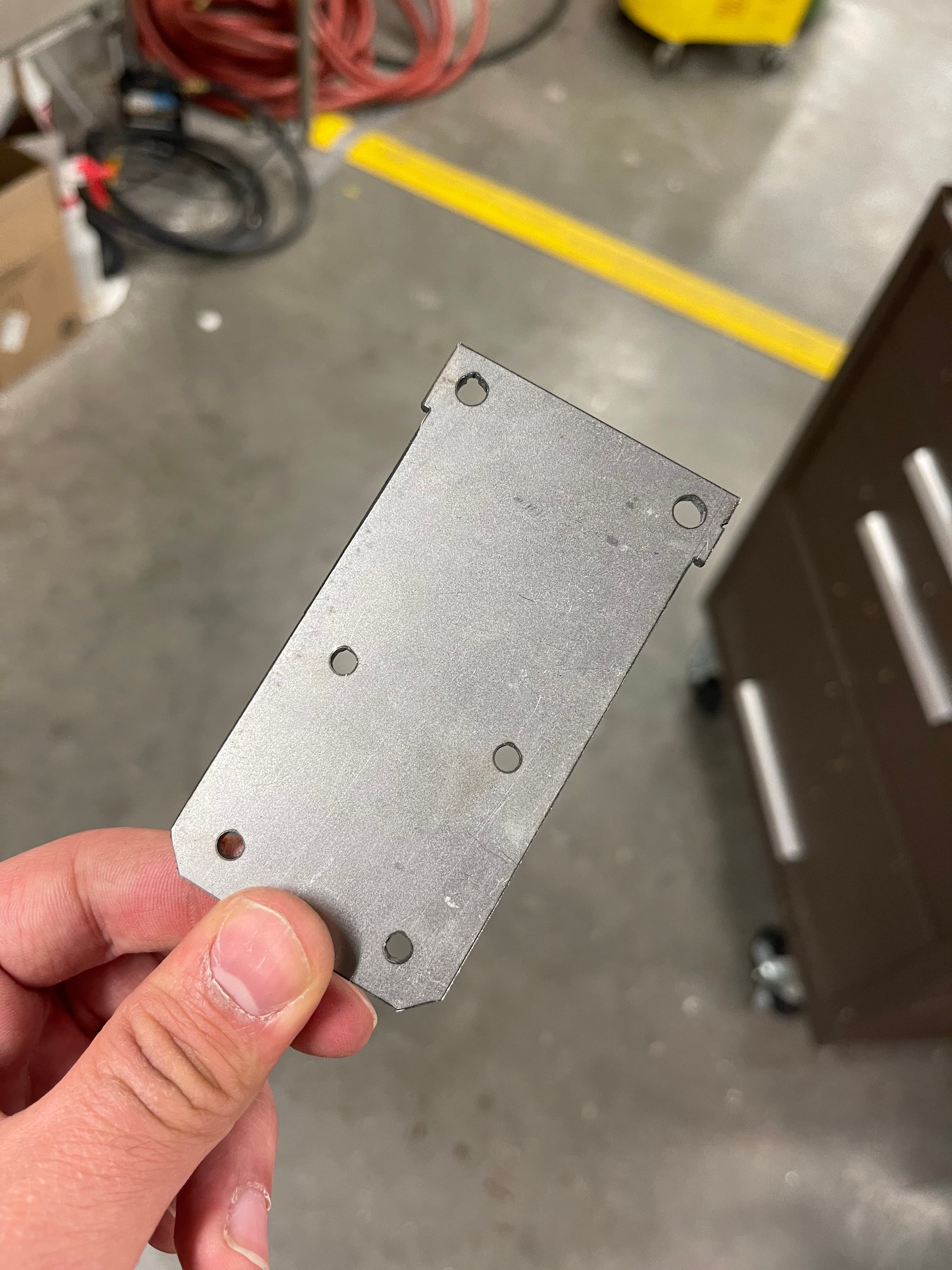
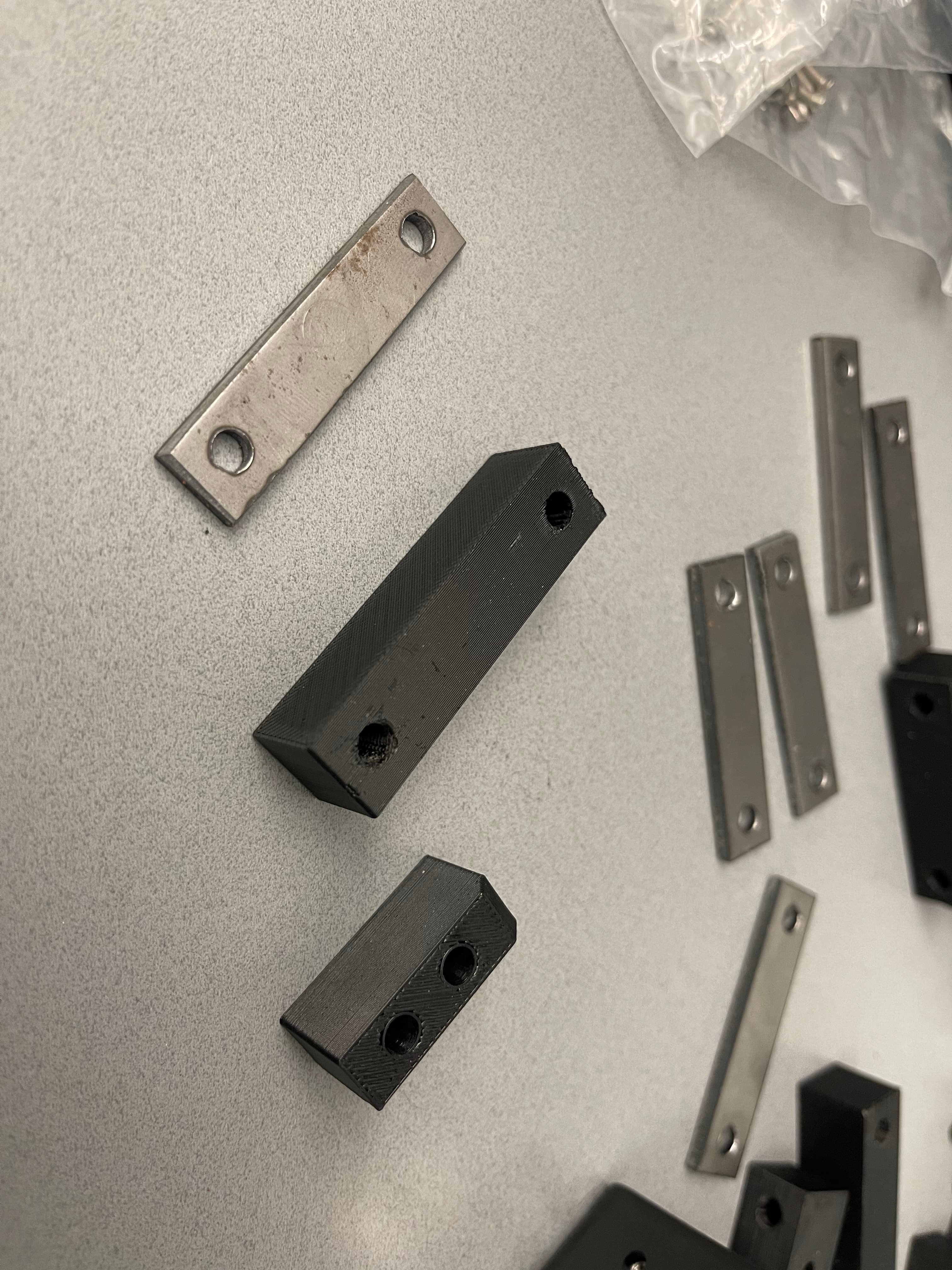
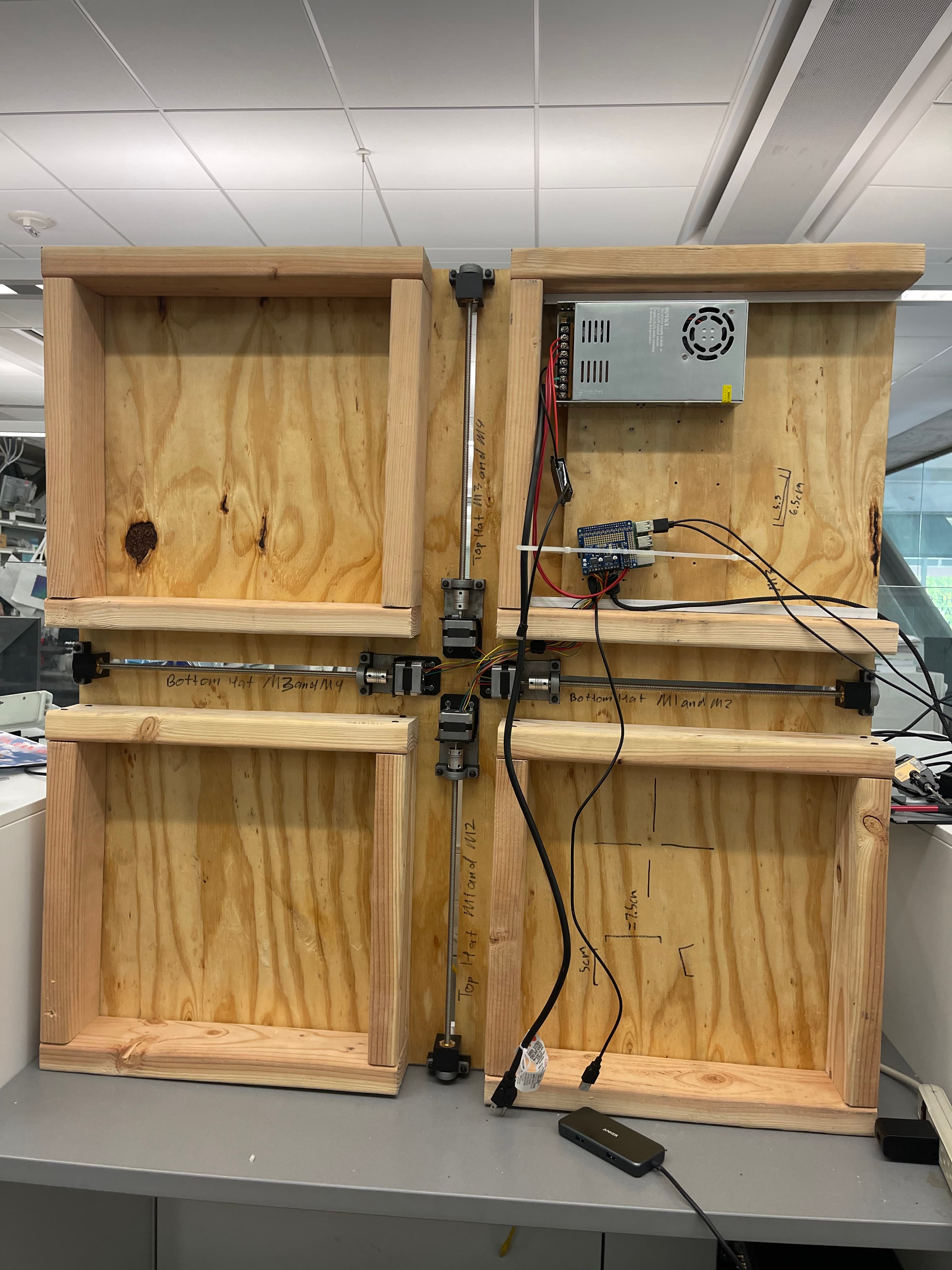
I began researching existing concepts for drone docks and found that rail-based clamping systems were one of the more reliable ideas already floating around. Based on that, I designed a lead-screw-driven clamping mechanism that would sit underneath the landing pad. Once the drone touched down, four clamps would slide in and lock around its landing gear, securing it in place. This also gave us an easy way to integrate charging: we attached charging pads to the landing gear of the drone and paired them with charging contacts on the clamps. Once the clamps closed fully, the contacts aligned and power could be supplied directly to the drone.
While I was working on the dock, my teammate was designing the package delivery attachment that the drone would carry. His design used a lightweight frame with two DC motors operating a bottom-opening hatch. This allowed a courier to load a package quickly before takeoff and allowed the drone to release it gently at the destination. Another teammate focused on integrating the system into a delivery truck. We decided the best approach was to build a roof hatch that would open on command, with a lift mechanism that raised the entire dock up through the roof for takeoff and landing. This eliminated the need for the courier to leave the vehicle and made the system much more efficient.
For the electronics, we kept things intentionally simple to stay within our budget. We used a Raspberry Pi as the central controller, paired with motor drivers and a basic 12-volt power supply. This gave us enough capability to run the clamps, operate the roof hatch system, and test basic automation without overcomplicating the build.
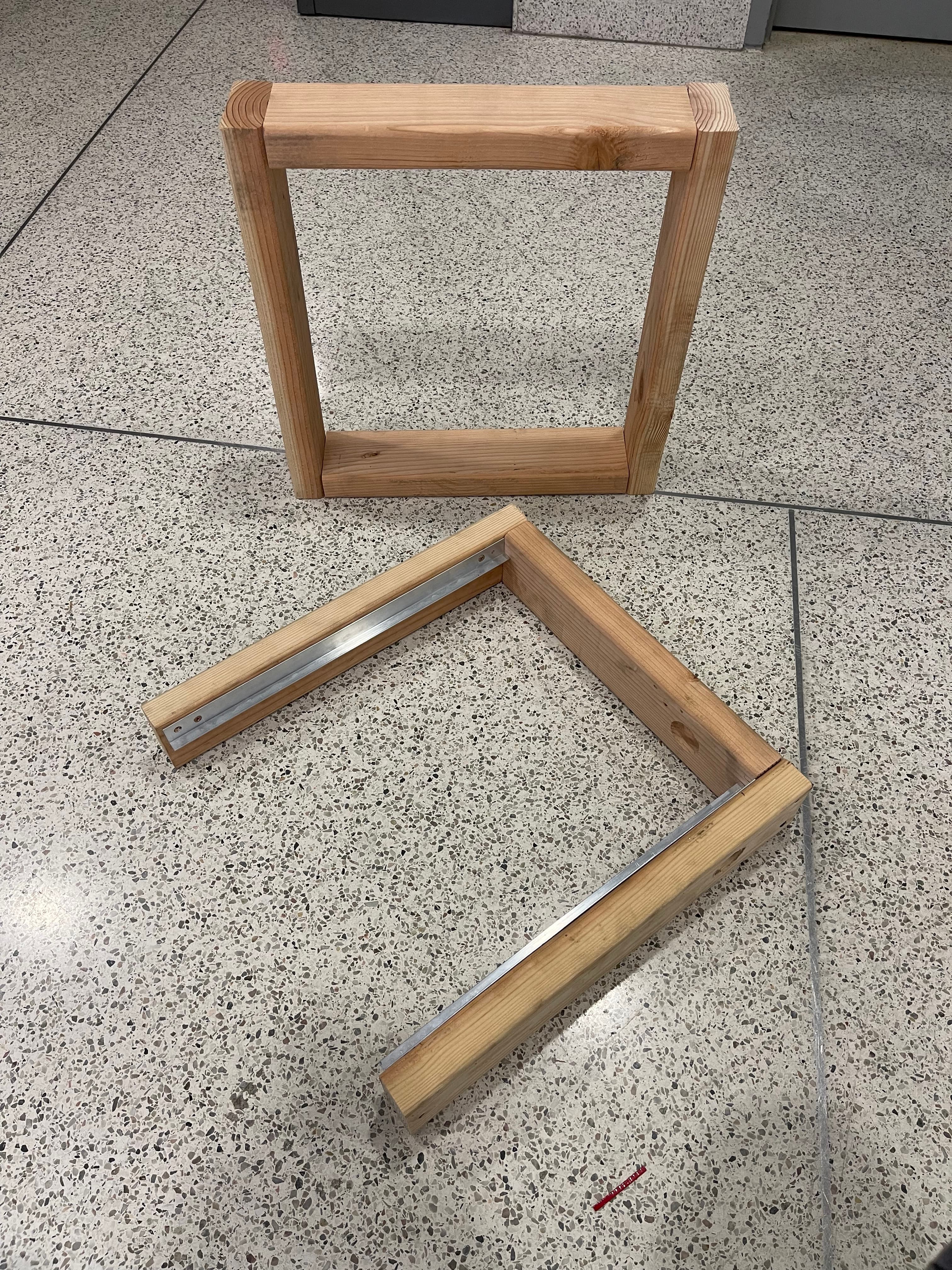
The biggest constraint on the project was our $1,000 budget. Our original vision included using 80/20 aluminum extrusion for most of the structure, but that alone would have consumed the entire budget. We had to pivot and switch many components to wooden structures to reduce cost. Although not ideal, this allowed us to build a functional prototype that demonstrated our concept clearly. Even with these material compromises, the core functionality of the dock — landing guidance, securing, package handling, and charging — was successfully integrated.
A large portion of the project also became a real-world feasibility study. We had extensive discussions with MITRE and our professor about FAA Part 107 regulations, particularly the requirement that the drone remain under 55 pounds including payload. We also talked about integrating RTK GPS, lidar, or visual markers into the dock to support autonomous landing — features that were out of scope for our prototype but could be added easily in a fully funded version. We even had to think through liability questions, such as what happens if the drone crashes or damages property, and who would be responsible. These conversations pushed us beyond just "building something" and forced us to think about operations, regulation, and safety in a very realistic way.
Being the project lead on this capstone taught me far more than how to design a drone dock. I learned how to communicate effectively with customers, manage teammates with different perspectives, and keep the project on schedule even when ideas conflicted or the budget pushed us in directions we didn't love. I also learned how dramatically resource limitations shape engineering outcomes, and how to compromise without losing the core purpose of the design.
MITRE was happy with the system we delivered, but personally there are things I wish we had more time and funding to improve. Still, we managed to design and build a fully working prototype that demonstrated the concept — and it served as a valuable case study in the feasibility of rural drone delivery operations. The biggest takeaway for me was simple: every team member brings a different vision of how a project should unfold, and as a team lead, it's your responsibility to balance those visions and still deliver something that meets customer requirements on time.
Attachments
Technologies & Tools
Gallery
.png&w=3840&q=75)
.png&w=3840&q=75)
.png&w=3840&q=75)
.png&w=3840&q=75)
.png&w=3840&q=75)
.png&w=3840&q=75)
.png&w=3840&q=75)
.png&w=3840&q=75)
.png&w=3840&q=75)